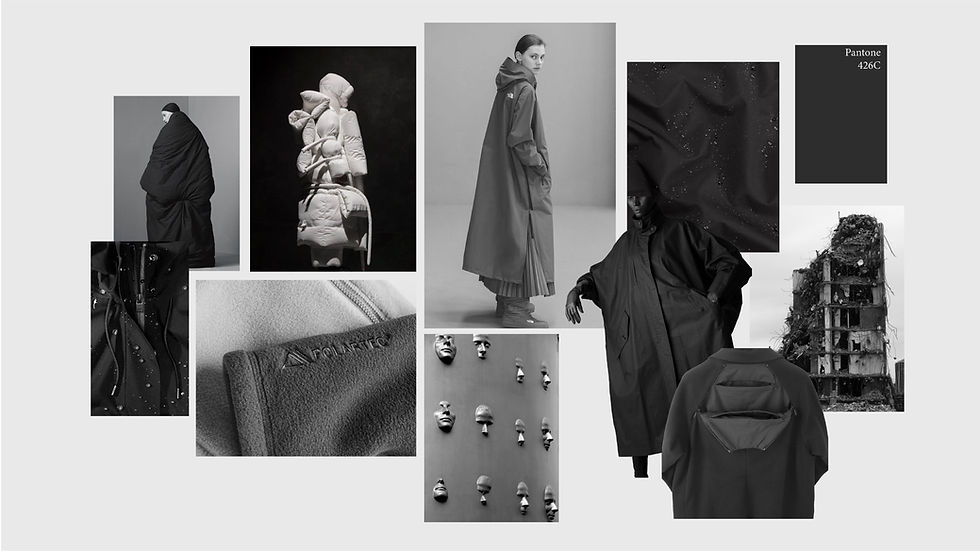
Urban Citizen Evcuation Garment
Mega-thrust Earthquake Evacuation Solution
Role
Technical Apparel Deisgner
Goal
To design a high-performance survival solution for urban citizens during a Cascadia-level earthquake, balancing life-saving functionality with daily aesthetics.
Challenge
Executed a full-cycle design process within a strict academic timeline.
Bridged the gap between raw disaster data and wearable technology.
Rigorous material validation through lab testing and physical prototyping.

Design Process
Secondary Research → Primary Research → Ideation → 3D/2D Development → Iterative Prototyping → Lab Testing → Usability Testing → Final Execution
Phase 1: Primary Research
To ensure the design addressed real-world pain points, I utilized a Mixed-Methods Research approach:
Expert Interviews: Consulted with SAR, K9 officers, and museum coordinators to identify technical pain points.
Survivor Narratives: Analyzed M8.8 earthquake survival stories and social media data.
Community Outreach: Surveyed active preparedness communities (r/earthquake, r/CascadiaPreppers) to validate real-world evacuation challenges.

Phase 2: Concept Development (The Strategy)
Design Cornerstones: Employed the Multiple Perspective Method and Design Universals to define the core pillars of the garment: Mobility, Protection, Emotional Support, Social Cohesion and Adaptability.
HMW Framework: Developed "How Might We" questions to pivot from problem identification to innovative design solutions.
Design Hierarchy: Intergrated direct feedback from primary and secondary research, and identified the " Could have", " Should have", "Must have".


Phase 3: Technical Execution & Iteration
Sketches: I explored the concept and design cornerstones through sketches, continuously refining and making trade-offs. At the beginning, the design was quite complex, aiming to address storage, load distribution, aesthetics, and full-body coverage all at once. Over time, I started to question which features truly mattered most to the user. This led to a process of simplifying and clarifying the design. Through ongoing refinement, the final direction focused on key priorities: quick donning and doffing, lightweight construction, durability, protection, and social integration.



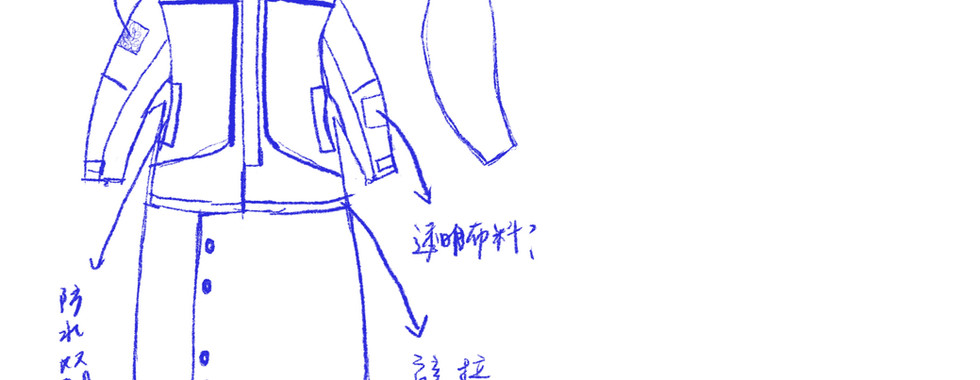
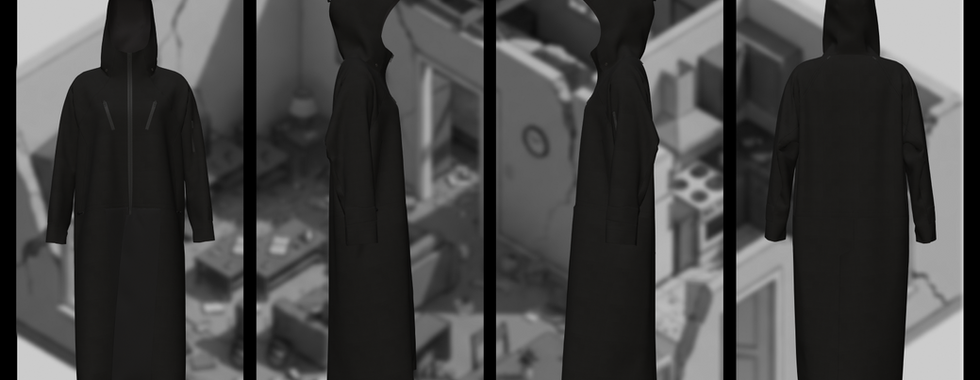
2D Technical Drawings (Illustrator) & 3D Works (CLO 3D, Browzwear): To create visual proof of concept.



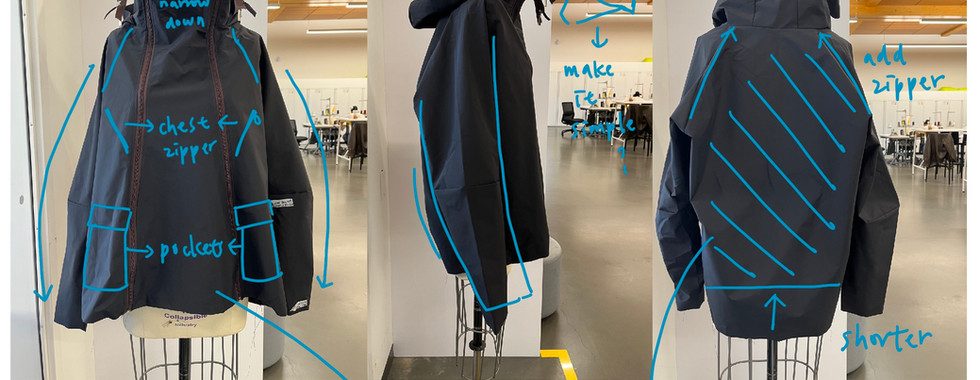
Physical Mock-ups: Conducted multiple rounds of physical sampling to refine ergonomic measurements and assembly sequences.





Material Science: Engineered a textile selection matrix based on research-driven performance needs.
Utilized Laser Cutting for precision testing samples.
Conducted in-lab performance testing: Hydrostatic Pressure (Waterproof), Moisture Vapor Transmission, Tearing Strength, and Color Fastness.





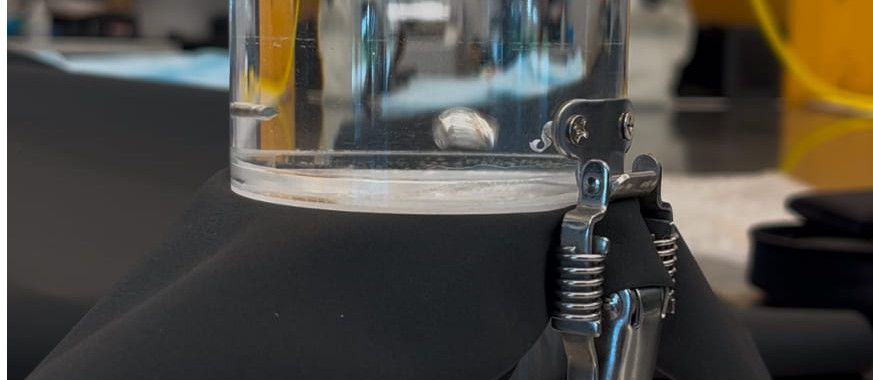
Phase 4: Validation (The Stress Test)
Cross-functional Collaboration
Partnered with professional sample sewers to translate complex tech packs into high-performance prototypes, ensuring design intent and technical construction were flawlessly executed.


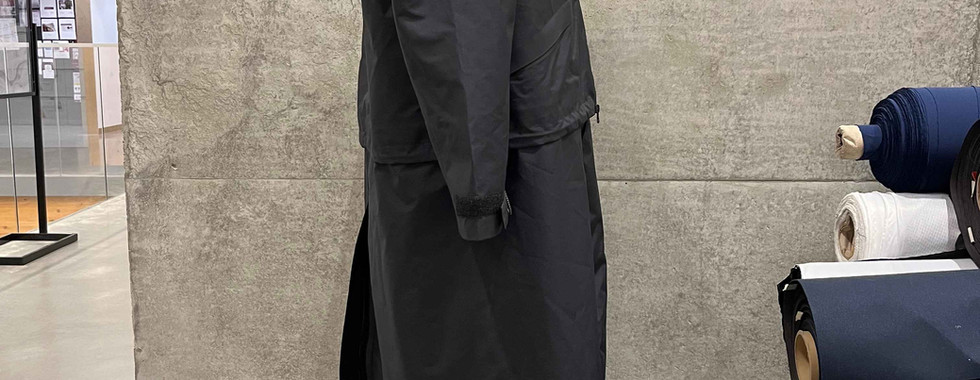


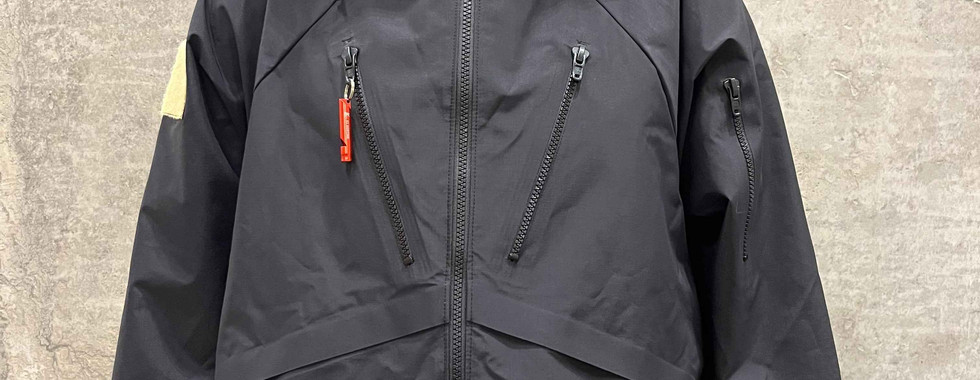


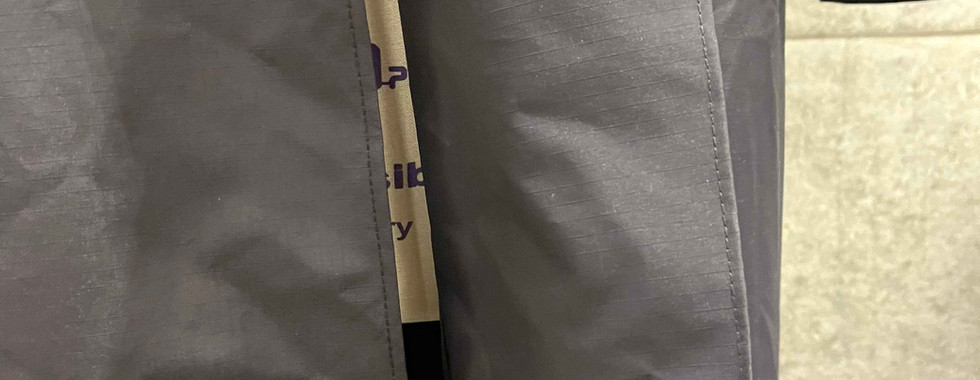


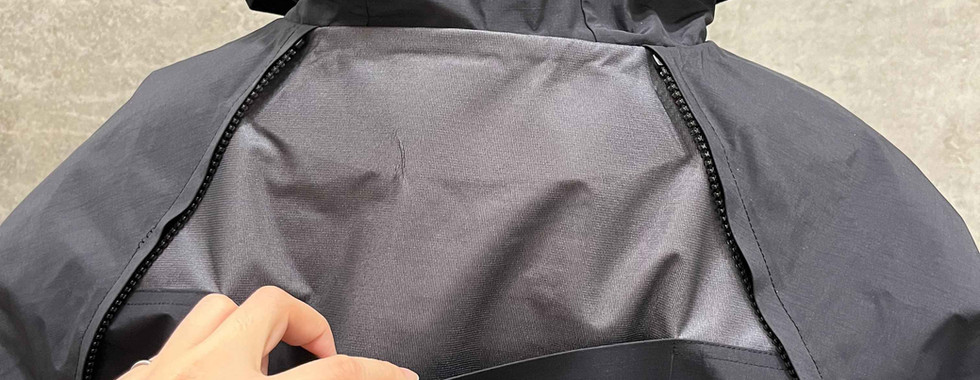
Simulation-Based Usability Test
Optimized the prototype by integrating feedback from 14 participants, focusing on ergonomic mobility and intuitive grab and go system.



Technical Revision
Adjusted patterns and seam construction to resolve interaction friction identified during post-earthquake scenario simulations.




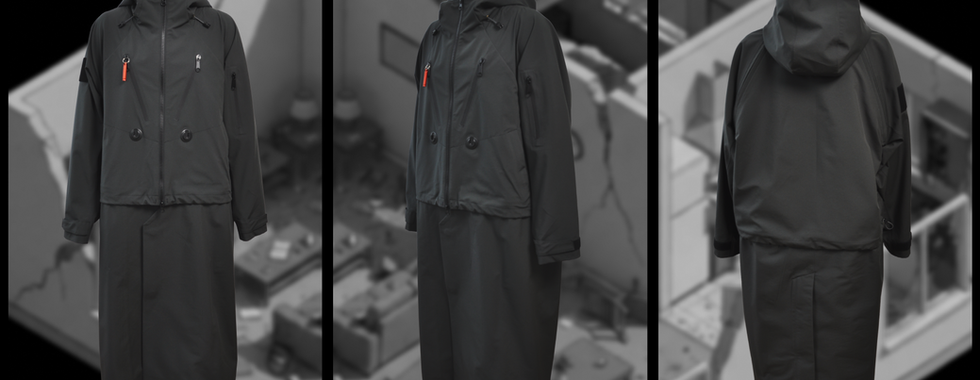
Final Sample
A validated, field-ready solution that balances lab-tested material performance with real-world user needs.



Impact
Successfully raised awareness for earthquake preparedness within the Vancouver community through design-led storytelling.
Lessons Learned
Mastered the end-to-end workflow of technical apparel, from operating industrial testing machinery to managing complex sample production.
Refined the ability to condense a year-long technical research project into a compelling 3-minute pitch for industry stakeholders.
Learned to identify the most impactful design elements through the lens of a limited budget.
Project Gallery


